

How to Prune Roses
Pruning is one of the best treatments you can give a rose bush. We'll help you to learn how, when and where cut.
The vast majority of plants these days are sold in plastic containers – one- and two-gallon sizes for perennials, three- and five-gallon sizes for shrubs.
Most trees are sold in even larger plastic pots or “balled and burlapped” – i.e. the roots and surrounding soil are dug, then wrapped in burlap for retail sale.
But there’s a third and far less used way to transport and sell young plants, one that’s actually older than the above two.
The technique is called “bare root,” and it’s a way to transplant plants without any soil or any container.
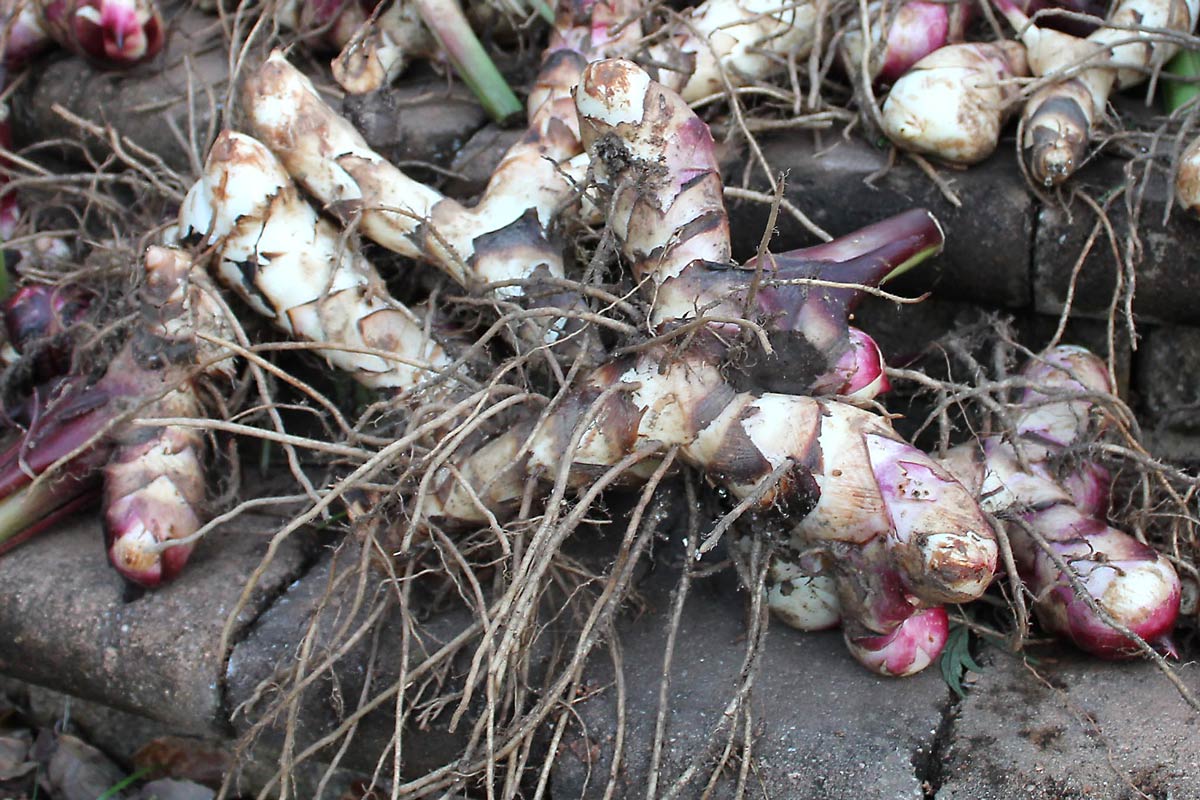
Although the plants themselves might not have any leaves or shoots, the roots of bare-root plants should be fleshy and dense, not mushy or shriveling from prolonged dryness. Photo by George Weigel
As the name implies, bare-root plants are dug, and the soil is washed off to expose the bare roots.
The roots can then be protected with a damp packing material such as sawdust or sphagnum, wrapped in plastic, and kept cool until the grower ships them.
The advantage is that plants can be shipped or transported at less cost than plants with heavier, root-laden rootballs.
Garden centers also sometimes sell bare-root offerings early in the season as a display-space-saving, slightly less expensive alternative to container-grown or balled-and-burlapped plants.
The down side is that plants can be sold bare-root during a fairly short window of time – primarily toward the end of their winter dormant season.
That’s why mail-order plant-sellers gear their shipping dates as much as possible to when an area is about ready to begin a new spring planting season.
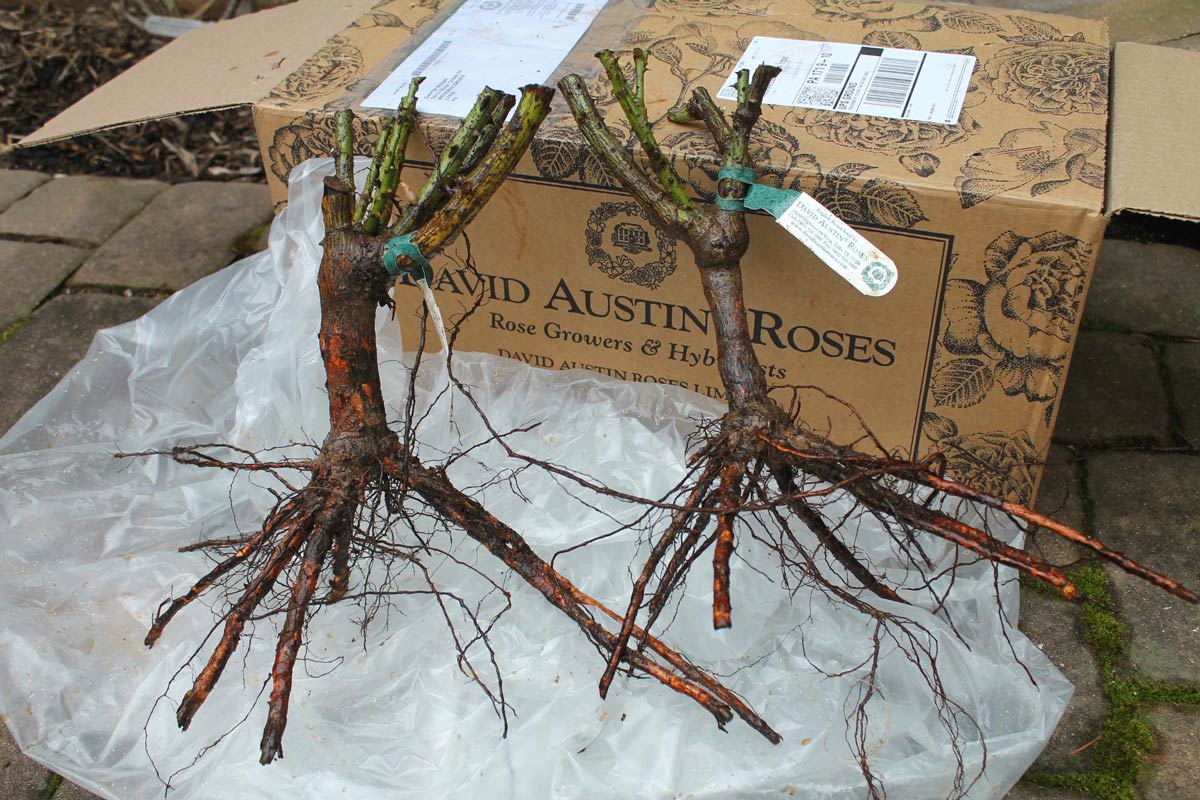
These roses were shipped bare-root, i.e. dug while they were still dormant and mailed out without soil. Photo by George Weigel
Bare-root plants might look dead when they arrive. Bare-root roses, for example, might look like bare sticks, and bare-root perennials probably will look like cut-off brown stubs with roots at the bottom.
However, these plants are alive but just still dormant – or at least they should be.
How to tell if a bare-root plant is dead and not dormant?
One bad sign is if the roots are mushy, moldy, or have a rotten (not earthy) smell to them.
Another bad sign is if the roots are dry, shriveled, and noticeably light in weight.
Healthy roots should have a “denseness” to them and should feel firm and fleshy.
Another good sign is if you can see signs of emerging green, either in expanding buds or in leaves starting to “color up.”
The real telltale sign will come as spring unfolds. Your bare-root plants should start growing foliage within a few weeks or at least by late spring.
If not, contact the vendor. Failures may be covered by warranty if you’ve followed instructions.
Assuming you’re ready and able to plant when your bare-root plants show up, first remove the packing material.
Then hydrate the roots before planting by soaking them in a bucket of water according to the vendor’s instructions. If instructions don’t specify, a half-hour is usually plenty for perennials and four to five hours is good for bare-root trees, shrubs, and roses.
If you can’t plant soon after the plants show up, keep them wrapped in damp packing material and stored in a cool but above-freezing place, such as a garage or shed.
If it’s going to be more than two or three days, pot the plants in potting mix, water them, and keep them in cool, shaded spot. Along an eastern or northern house wall or in a greenhouse or cold frame are good spots.
Either way, be sure to keep the roots damp. Never let them dry out.
Plant the bare-root plants by spreading the roots out in the hole and packing soil firmly all around and under them. Water well, and add a little more soil if the soil settles.
Determine your planting depth by locating the crown of the plant – the interface between the roots and where the above-ground shoots emerge. The crown should be at or just above the soil line.
For trees, look for the root “flare,” which is where the trunk begins to widen at the base before the roots branch out. This flare should be at or just above the soil line.
Once the plant is in the ground, watered, and the soil surface covered with an inch or two of mulch, treat it as you would any other container-grown or balled-and-burlapped plant.