

How Long Do Weed Seeds Last in the Soil?
Weeds are survivors. Their seeds can live for years in the soil waiting for the right conditions to sprout.
Black medic (Medicago lupulina) is a common garden weed often mistaken for clover. Black medic can be found in pathways, landscape beds where its low-growing, creeping mats can quickly weave through your favorite perennials and under the cover of ornamental shrubs, roadsides, and most any sunny neglected area.
It also invades thin, compacted, low-fertility lawns and can become a problem due to some advantages over turfgrass. Black medic is a vigorous grower with roots well adapted to penetrating compacted soil. It is a legume, meaning it’s able to extract nitrogen from the air and convert it into a form that plant roots can use as a key growth nutrient. In lawns low in nitrogen, black medic usually wins the battle.
Because black medic produces thousands of hardy seeds, a small patch this year can become a carpet of weeds next season if not managed correctly.
Common name: Black medic
Scientific name: Medicago lupulina
Life cycle: Summer annual
Where it grows: Thrives in compacted, low-nitrogen, and alkaline soils in garden beds, pathways, thin lawns
How it spreads: Seed
When it sprouts/emerges: Spring
When it flowers or seeds: late spring/early summer
Root type: Deep taproot with coarsely branched secondary roots
Identification: Low-growing mats, small yellow flower clusters, and three oval leaflets.
Why it’s a problem: Rapid seedling production fills bare, nutrient-poor soil quickly.
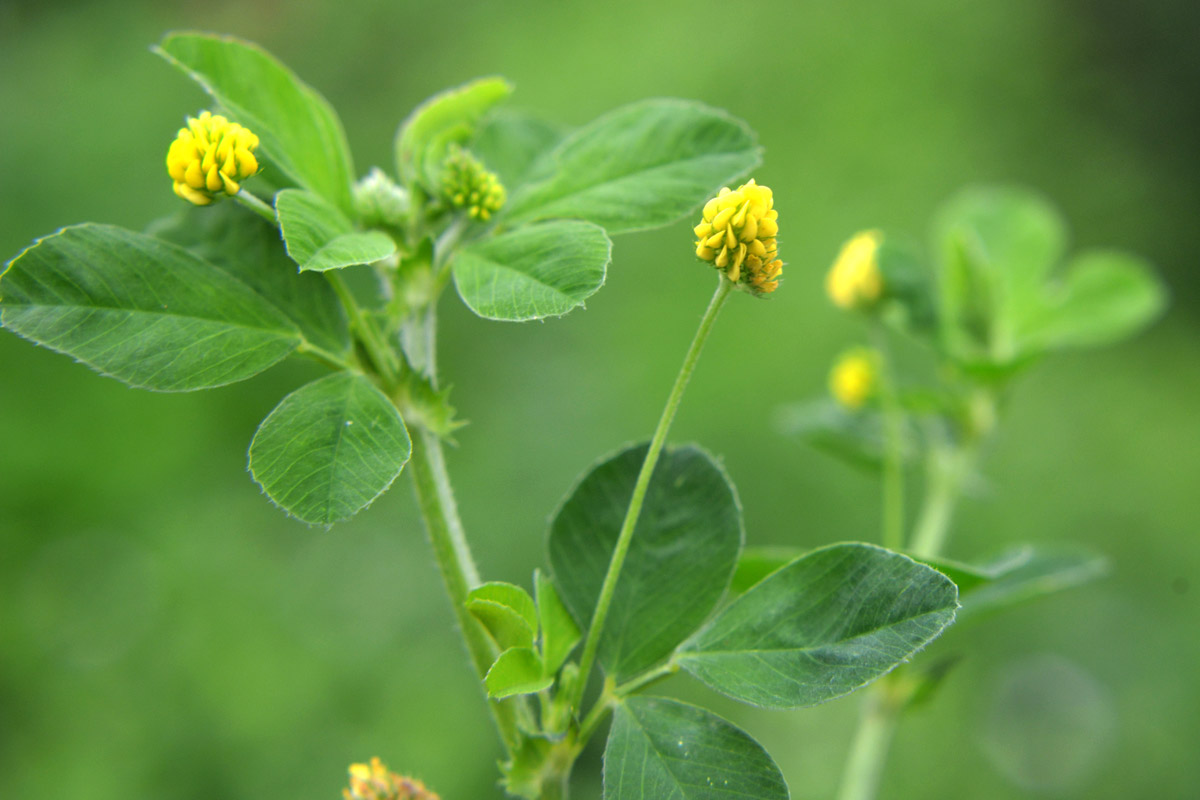
Black medic in bloom with yellow flowers and trifoliate leaves. Orest Lyzhechka / iStock / Getty Images Plus
Black medic is often nicknamed "black clover" because of its three-leaflet clusters. However, knowing the difference is key to choosing the right treatment.
To the untrained eye, it looks like white clover (Trifolium repens), a familiar spring-blooming perennial.
Both have trifoliate leaves, but black medic’s leaflets are more egg-shaped than round, and have serrated margins. However, Black medic’s fast-spreading mats bloom yellow in summer instead of the white to pink flowers of white clover. Use this 3-point check to identify the invader in your flower beds.
The Pro Tip: Look at the seed pods. As the yellow flowers fade, they mature into small, nearly black seed capsules, which is how the plant got the first half of its name.
Why Black Medic Loves Your Garden Beds
Black medic is a "legume," meaning it can create its own nitrogen. This allows it to thrive in "lean" or poor soil where your ornamental plants might be struggling. It also possesses a tough, deep taproot that can pierce through compacted soil and survive dry summer spells that leave other plants wilting.
If you find it spreading around your shrubs, it’s a sign that the soil may be compacted or that your mulch layer has thinned out, allowing light to reach buried seeds.
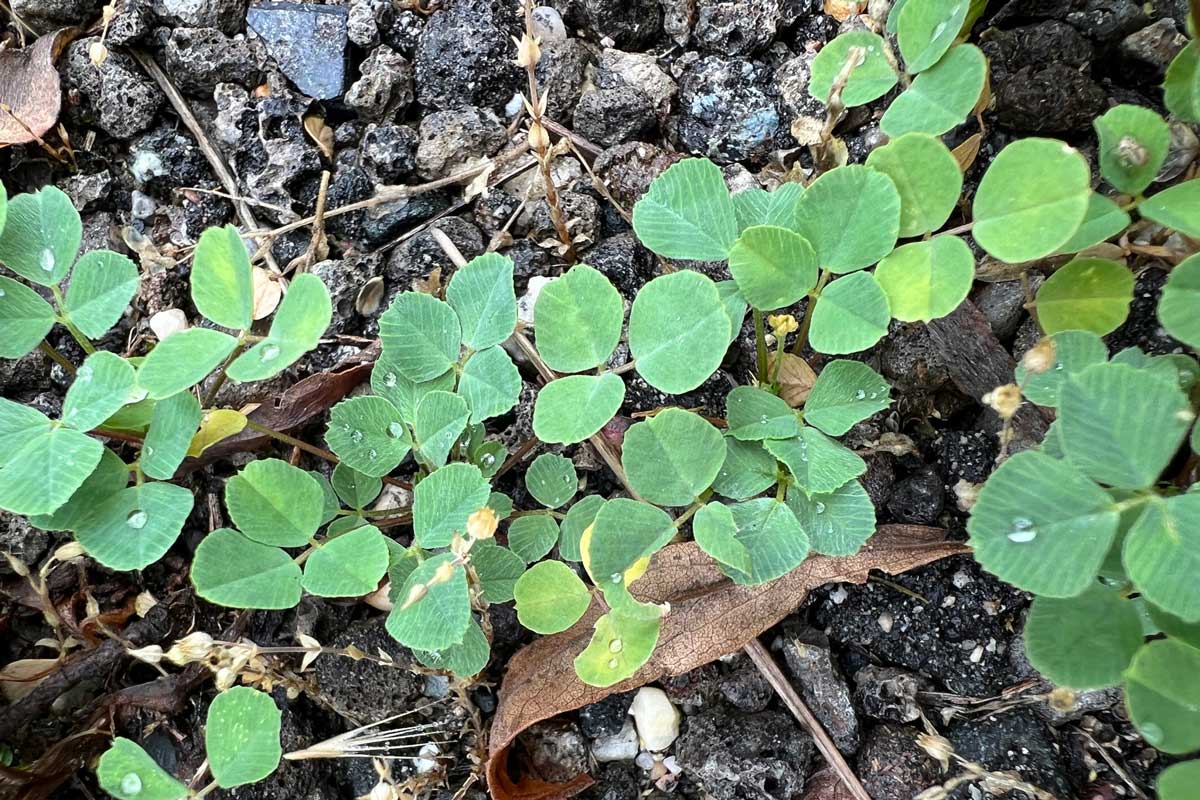
Because black medic is an annual that can develop a deep taproot, it’s important to pull plants early, especially before they develop deep rootsdrop their black seeds. imwolfe | iNaturalist
Because black medic is an annual that can develop a deep taproot, it’s important to pull plants when they are young and haven't developed deep roots, especially before they drop their black seeds.
In areas with dense infestations where hand-pulling isn't practical:
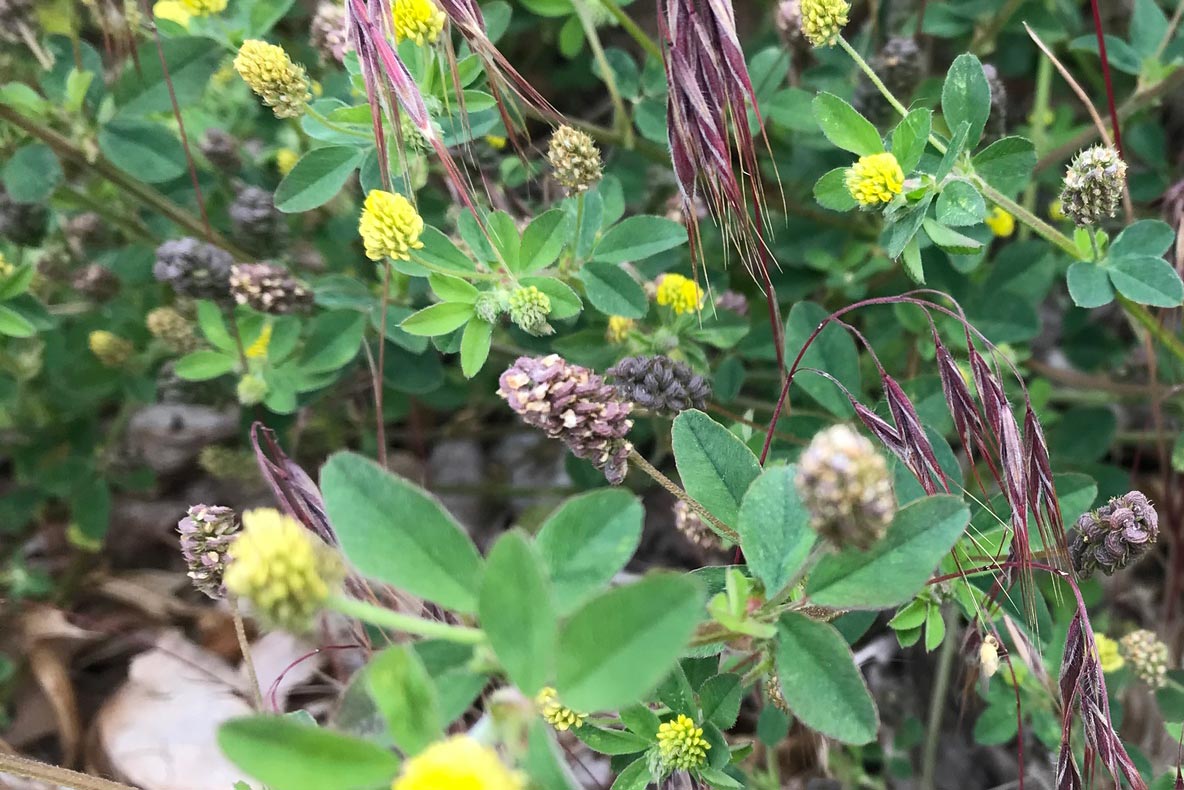
Seedheads forming on a black medic plant. mmsorensen | iNaturalist
Since black medic grows from scratch every year from seeds dropped the previous summer, the most effective way to manage it is to prevent the seeds from ever taking root.
Ornamental beds:
Maintain Your Mulch Barrier
A thick layer (2 to 3 inches) of wood mulch is your first line of defense. It blocks the sunlight that black medic seeds need to germinate. However, seeds can still sprout on top of old, decomposing mulch.
Apply a Pre-Emergent Preventer
Lawns:
Good lawn care practices Create conditions that prevent black medic from taking hold will create a healthy lawn that crowds out invaders like Black medic.
Quick FAQ